Sofar PPC - Increasing Conversion by 13% and Activation by 41%

2019–2020
Sofar Sounds ran paid social campaigns driving music fans to city-specific landing pages across London, New York, Chicago, and other major markets. The pages were the first thing a potential attendee saw after clicking an Instagram or Facebook ad - and they weren't working. Bounce rates were high, account creation was low, and users were dropping out before they ever applied for a ticket.
This case study covers two connected projects: redesigning the PPC city landing pages, and redesigning the individual event pages. Both sat within the same fan acquisition funnel. The city page work delivered a 13% increase in conversion rate - from social media ad click through to ticket application - and a 41% increase in activation rate, measured as account creation enabling ticket purchase.
The Problem
Users arriving from paid social ads landed on city pages that failed to answer the questions they actually had. Sofar's model is unusual - you apply for tickets through a lottery, the venue is kept secret until 24 hours before, and you don't know who's performing until you arrive. That's a compelling proposition if you understand it. If you don't, it reads as evasive and untrustworthy.
Research confirmed what the data suggested. Users were:
Confused about what Sofar actually was and whether it was legitimate
Unsure what genre of music they'd hear or who would perform
Overwhelmed by the number of events with no clear way to differentiate them
Hesitant about paying for a ticket to something they couldn't verify
In some cases - particularly female users - concerned about venue safety for an unknown location
The pages weren't addressing any of these concerns. They were presenting events without context, asking for commitment before establishing trust.
My Role
I led product design within the Fan Experience squad alongside a Senior Researcher and Product Manager. The squad also included six engineers and we collaborated with Data, Brand, and Growth stakeholders throughout.
Process
Discover
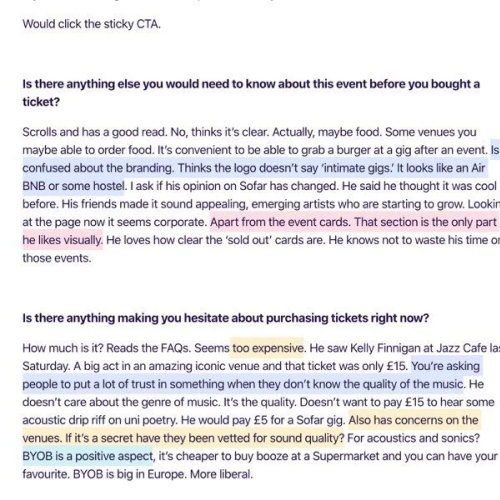
We began by consolidating existing data - Hotjar polls, Google Analytics, previous usability tests, heuristic analysis, and customer support logs. The picture was consistent: users didn't understand the product and didn't trust it enough to commit.
To go deeper we travelled to New York for a week - myself, the Senior Researcher, and the Product Manager - to attend Sofar shows in person, conduct in-market research with real users, and work directly with the NYC office. Being a global brand with audiences in different cities meant assumptions built from London data weren't always transferable. The New York research surfaced nuances that remote testing wouldn't have caught, particularly around trust signals and how users in different markets perceived the brand.
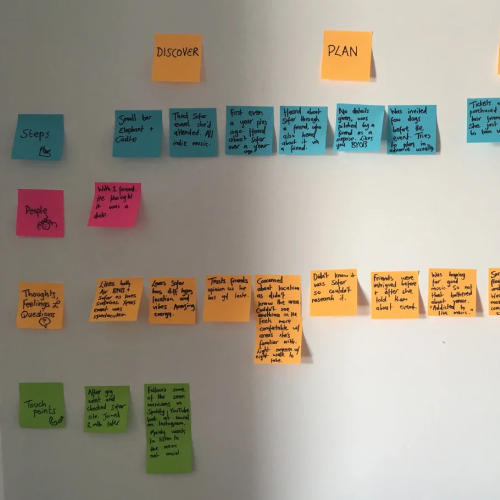
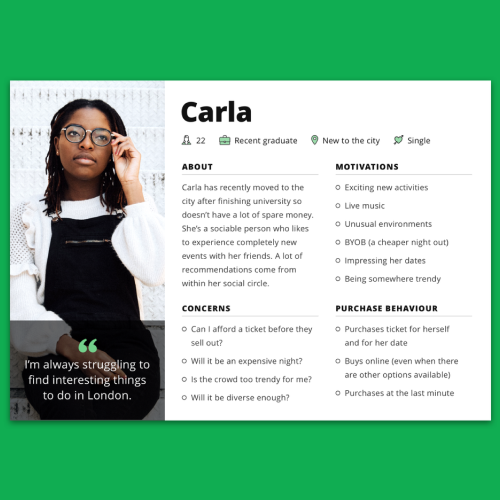
Back in London we ran card sorting workshops, conducted interviews, and compiled findings into affinity maps, empathy maps, and refined personas. We used Google Optimize alongside Hotjar for quantitative validation throughout.
Key research findings:
82% of users said knowing when they'd find out who was performing would encourage them to buy tickets - the single most important trust signal we identified
Genre and artist quality were the primary hesitation points, not price
Safety concerns were significant for female users attending unknown venues - a finding that shaped our imagery and copy decisions directly
Define
We synthesised findings into How Might We statements and a funnel matrix mapping where users were dropping out and why. The core hypothesis: if we could establish trust and answer the questions users had before they were asked to commit, conversion would improve.
Develop
We ran Crazy 8s ideation sessions, prioritised solutions using an effort/value matrix, and built prototypes for A/B testing and usability validation. We introduced additional UX metrics - task success rate and task ease - alongside the existing conversion tracking to give us a richer picture of what was and wasn't working.
Key design decisions:
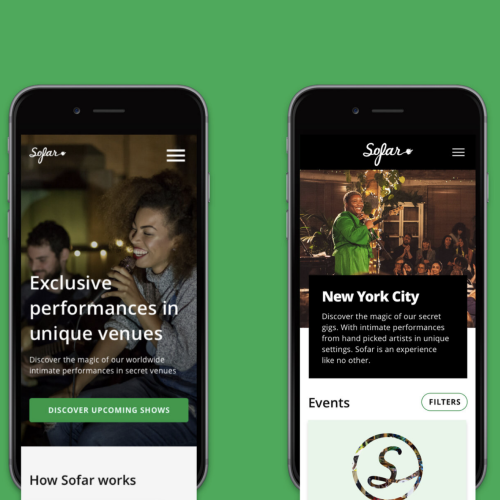
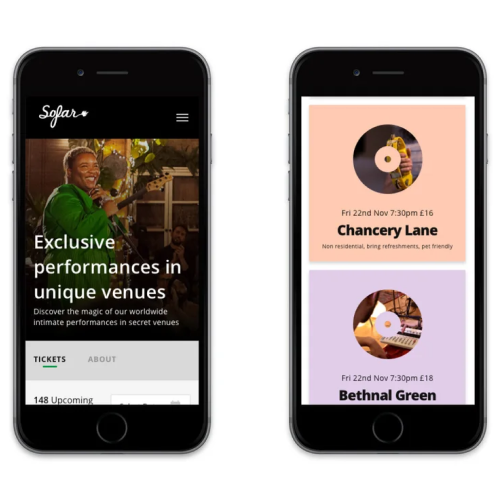
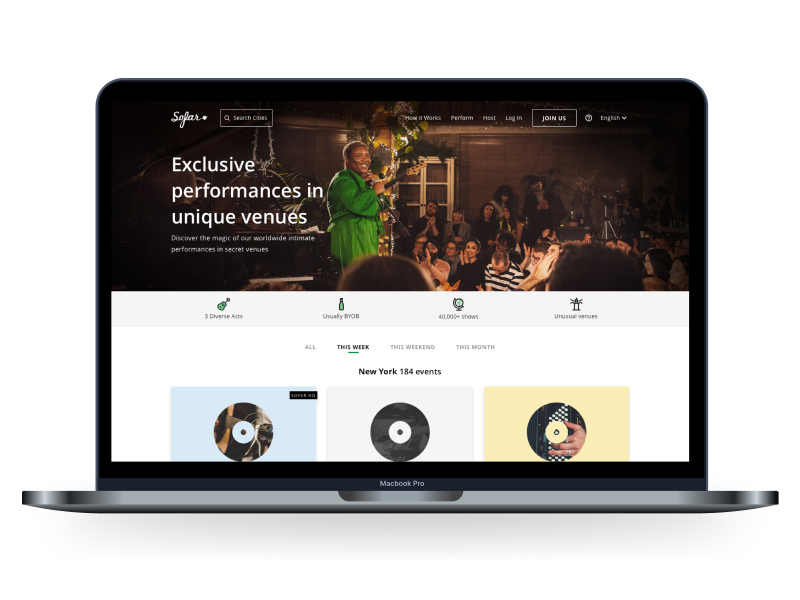
Led with imagery showing diverse audiences and real venues rather than generic photography - directly addressing the inclusivity and trust concerns the research surfaced
Made Sofar's unique ticketing process explicit and prominent rather than buried in FAQs - the mystery is the product, but users needed to understand the rules before they'd engage with it
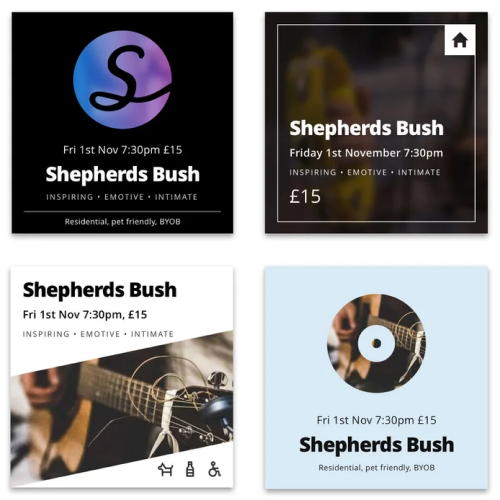
Introduced clearer event differentiation so users could make meaningful choices rather than feeling overwhelmed
Added sticky CTAs and improved pricing transparency to reduce friction at the commitment point
Restructured information hierarchy to surface the 82% insight - when you'd find out who was playing - as a primary trust signal
We ran multiple rounds of usability testing across the development phase, iterating between sessions. By the time we reached final designs the core conversion and trust problems had been validated as solved in testing.
Deliver
Final designs were handed off via Zeplin. We launched just before the holiday break and monitored performance through January.
Outcome
The redesign delivered a 13% increase in conversion rate - measured from social media ad click through to ticket application - and a 41% increase in activation rate, measured as account creation enabling ticket purchase.
The research also surfaced a finding we hadn't set out to find: a significant proportion of female users had safety concerns about attending events at unknown venues. That insight fed back into product and brand decisions beyond the scope of this project - it was the kind of finding that only emerges when you design research to listen broadly rather than just validate existing hypotheses.
Event Page Redesign
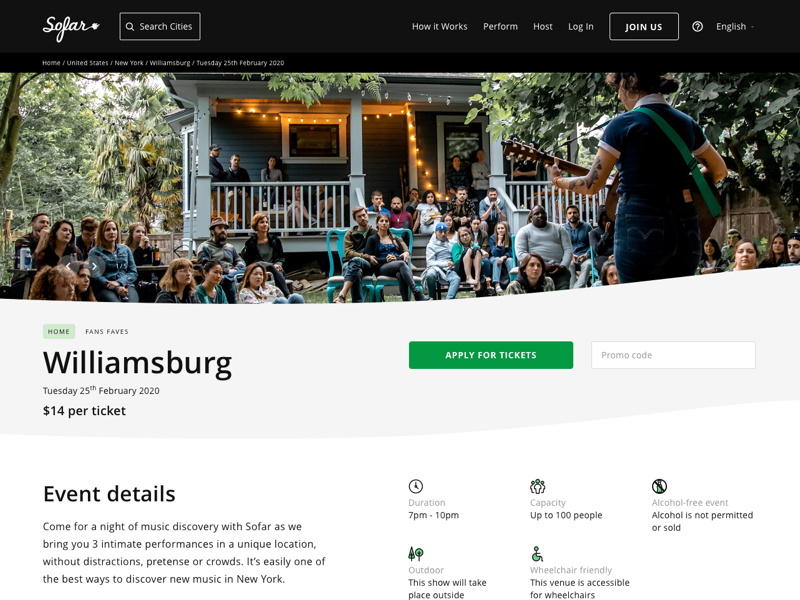
Running in parallel, we redesigned the individual event pages - the second touchpoint in the same funnel. Users who made it past the city landing page were landing on event pages that repeated the same information without adding anything new.
The redesign focused on chunking information more effectively, surfacing the details users actually needed to make a decision - venue capacity, event duration, what the space would be like - and making the application pathway unambiguous.
The project was paused when COVID hit and Sofar could no longer run live events. The redesign has since been partially rolled out - the current event pages share structural similarities with the work we did, though the product has evolved significantly in the intervening years.
The design function built during this period - including the team, DesignOps, and Maestro design system - is documented separately.